
So what exactly is this Enneagram thing anyway? Maybe you’ve heard about it on social media or from a friend saying “that’s such a (fill in the blank number) thing to do.” In this post I’m sharing a brief intro into my understanding of The Enneagram.
The Enneagram is a personality typing system and the first thing to let you know is that it’s not real. By real I mean that many psychologists would say it’s not a valid and reliable measure and holds no real meaning. I don’t disagree with them. And yet I find it really helpful in my personal life and with clients.
The Enneagram is, at its core, a spiritual practice. The gist is there are nine personality types, best defined as nine different ways of seeing the world. In any given moment, there are thousands of pieces of data my mind could be focusing on – the view out the window, the facial expression of a person nearby, that card I need to put in the mail today, some difficult interaction I had yesterday, my stomach saying I’m hungry…you get the idea. We can’t focus on everything all at once and The Enneagram is a way of explaining what we might focus on more often and give an understanding of our motivation for this.
When I first heard about The Enneagram I was skeptical. The most widely accepted measure of personality in my field is OCEAN (openness, conscientiousness, extroversion, agreeableness, and neuroticism). OCEAN is valid and reliable and often used in psychological research. The problem is it’s not that user-friendly for the average person. I can know I’m high in conscientiousness and agreeableness and low in neuroticism but it doesn’t easily explain my reality or how I understand the world and communicate that to others.
The Enneagram is shorthand and I always let clients know that if it isn’t a good fit for them, no problem. Except it usually is a good fit and sparks helpful conversation about how a person understands the world, communicates and behaves. It’s helped me understand myself and also helped in understanding relationships where I know the other person’s number. For example, my 6 husband sees all the potential outcomes of a situation. He thinks of “what ifs” that I would never have considered. Often this is helpful. In excess it’s an anxiety-ridden house of mirrors where reality feels skewed by so many potential negative outcomes. As a 1, I just want to do the “right” thing. I might say, “I just know in my gut this is the right decision. No, I haven’t assessed every potential what if. But this is what we should do.” Sometimes this has led to conflict. Maybe more than sometimes. But understanding myself as a 1 and him as a 6 has helped us tap into the best of ourselves, tame down the worst of ourselves, and better understand the other person’s perspective.
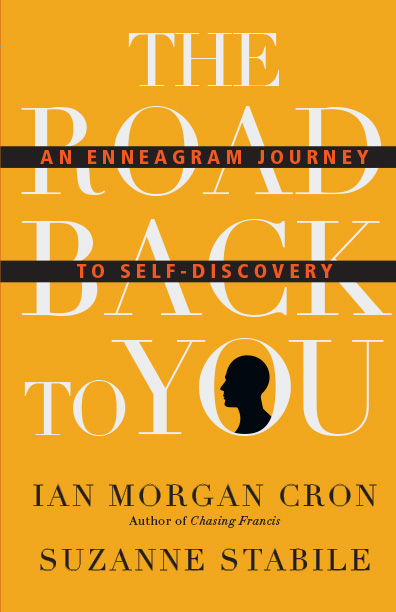
I’ll do future posts on each number but here’s a very high-level overview from my favorite book on the topic, The Road Back to You.
1. THE PERFECTIONIST – ethical, dedicated and reliable, they are motivated by a desire to live the right way, improve the world, and avoid fault and blame.
2. THE HELPER – warm, caring and giving, they are motivated by a need to be loved and needed, and to avoid acknowledging their own needs.
3. THE PERFORMER – success-oriented, image-conscious and wired for productivity, they are motivated by a need to be (or appear to be) successful and avoid failure.
4. THE ROMANTIC – creative, sensitive and moody, they are motivated by a need to be understood, experience their feelings and avoid being ordinary.
5. THE INVESTIGATOR – analytical, detached and private, they are motivated by a need to gain knowledge, conserve energy and avoid relying on others.
6. THE LOYALIST – committed, practical and witty…worst-case-scenario thinkers…motivated by fear and the need for security.
7. THE ENTHUSIAST – fun, spontaneous and adventurous…motivated by a need to be happy, to plan stimulating experiences and to avoid pain.
8. THE CHALLENGER – commanding, intense and confrontational…motivated by a need to be strong and avoid feeling weak or vulnerable.
9. THE PEACEMAKER – pleasant, laid back and accommodating…motivated by a need to keep the peace, merge with others and avoid conflict.
To limit the variety of human personalities to only 9 is highly reductive. No person is exactly all of these or only these. Rather, we’re all a little of all nine. Check out The Road Back to You for more information. It’s a quick read.


 therapyhorizon.com