Job Crafting

Happy Labor Day!  In honor of this holiday that “celebrates the social and economic achievements of American workers” (dol.gov), this post will focus on boosting our happiness at work through job crafting.

I first learned the term “job crafting” from The Happiness Lab podcast by Dr. Laurie Santos. Dr. Laurie is a psychologist at Yale who teaches the most popular course on campus, Psychology and the Good Life.  The class and the podcast teach simple and practical ways to boost our happiness using psychological principles.  Dr. Laurie takes a scientific study and uses her funny and approachable style to offer real-world methods for improving wellbeing in our personal lives and at work.

In the episode on job crafting (found here) Dr. Laurie covers the idea that work is much more than a place to earn money.  Everyone wants to do work that matters and job crafting is a way to reframe our work in order to recognize the contributions we make.  And this concept can apply in any work environment – even low-prestige jobs.

I love the interview with Marty, the Yale pest control specialist, who loves his work and views it as a way to contribute to the world.  Pest management isn’t typically considered a glamorous role, but Marty uses job crafting to view his work as helping the students on campus.  They feel comfortable and have a good living experience, in part because he’s available to remove unwanted critters.

Another example of job crafting referenced in the podcast involves hospital janitorial staff on a chemotherapy ward.  These folks might also view their job as not-so-glamorous, especially since a big part of the work involves cleaning up vomit.  Dr. Laurie uses the example of trying to brighten a patient’s day by making light of this cleaning up and saying “it’s alright because it’s job security for me.”  If pest control and vomit-cleaning can be jobs that matter then any of us can find something about our work that matters.  

Job crafting is a way for us to bring our unique strengths to our work.  It’s good for our mental health to have a purpose and feel that our contributions matter.  Cashiers can job craft with small talk that makes someone smile as they ring up their purchase.  Farmers can job craft by remembering that the long days of harvest feed the livestock and the people of the world. Garbage collectors can job craft by remembering that without them, cities would be breeding grounds for the plague.

Happy Labor Day!  May you return to work tomorrow refreshed and focusing on the unique contribution you make there.

Enneagram 4: The Individualist

An introduction, critique, and invitation from our resident Enneagram Four

By Toby Kriwiel, LMFT

The last blog post was about The Enneagram 3 (click HERE to go back and read it). 

When I was first introduced to the Enneagram, I held some skepticism. The idea that there are nine types of human personalities seemed like a pretty thin idea to me. The Enneagram has a long history that has formed over centuries, but I was first introduced to it in 2019. At that time, I was a student in a masters program for Marriage and Family Therapy, and probably even more so, a student of the human experience. It was not a part of the curriculum, but the Enneagram seemed to be popping up everywhere else — on social media, at dinner tables, and in introductions with other people. I continued to grapple with my skepticism, and what I perceived as an attempt to put people in (yet another) box. When I shared these thoughts with people who were more versed in the ideas of the Enneagram, I often received the response of “oh, that seems like a very ‘Four’ thing to say.” I then read more about the Enneagram, and the Type Four, and soon knew that in the world of the Enneagram – I am, in fact, a Four.

The Enneagram Type Four is “The Individualist.” 

Fours are self-aware, sensitive, and reserved. They are emotionally honest, creative, and personal, but can also be moody and self-conscious” (The Enneagram Institute, 2024) 

Fours have also been called “The Romantic” (Road Back to You, 2016). Introspection can be a meaningful retreat for the Four, though it can at times be riddled with loneliness, grief, and insecurity. “More than any other type, Fours are acutely aware of and focused on their personal differences and deficiencies.” (The Enneagram Institute, 2024)

Emotions hold strong priority in the life of a Four. These emotions are not simply small notifications in the corners of their lives, but rather, powerful sources of guidance and deep wisdom for Fours as they navigate their world, their days, and their relationships. This emotional awareness can be so rich. At the same time, it can also be a source of difficulty, particularly in a culture that often de-prioritizes emotions as a part of the human experience. In the article last week here on the HTA blog, Sarah explained that Enneagram Threes (known as The Performer) are often rewarded for their “Three-ness”… in ways of popularity, financial success, or social influence. Positive reinforcement does not come so easily for Fours. While the strengths of the Fours can be more subtle, these strengths and values can also make many things possible.

To find Fours, you can simply open your Spotify app (or wherever you listen to music), or you can shuffle through the shelves of poetry at the library, or take a stroll through an art museum. You also might find a Four next to a sauce pan over medium-low heat, whisking away at the complex aromas that might just need one more slight touch of oregano, and a pinch more of salt, and oooh, a few drops of lemon juice. Or, you might find a Four in a quiet conversation, when grief wells up in your heart, and maybe in your tear ducts, and they do not flinch, but invite you into the beauty of your own emotion. Fours can have a way of both expanding our worlds and making us feel less alone.

I remember a time, as a teenager, when my dad came home with a few Bob Dylan albums he had just purchased. I had not yet heard of Bob Dylan. When he put the CD in the car for the first time, I winced at the dude’s voice coming through the speakers. It was gnarly. I chalked it up to my dad’s lacking tastes in music (rather than my own narrow tastes as a teenager). But those albums stayed in the car, and for some reason, I kept listening. And I felt things, new things, and the times started a-changing, and I learned something about myself and the possibility of lyrics, and poetic expressions of deep thought. In the world of the Enneagram, I am happy to share the space of being a “Four” with the Freewheelin’ Bob Dylan. 

"Yes, and how many times must a man look up,
Before he can see the sky?
And how many ears must one man have
Before be can hear people cry?"
Blowin' In The Wind -- Bob Dylan, 1962

Now as a self-identified 4, and as a therapist too, I do still hold critique for the ideas of the Enneagram. This might be a bit of a hot take – but I think there is approximately 8.2 billion personality types in the world, currently. If we include the history of the human race, well now we are talking about an estimated 100 billion types of personality; an unfathomable number. The Enneagram, with its nine types, is by nature reducing something that is very complex – human ways of being. These ways of being are very influenced by culture, and history, and geography, and family, and stories, all of which is not able to be fully considered within the Enneagram.

That being said, the Enneagram can make the complex conversation of “who are we?” more approachable and inviting. I have found myself in many meaningful conversations with friends and colleagues through the language and ideas of the Enneagram. These conversations led to meaningful connections, and the feeling of being seen and understood (which is like gold for a Four). It also helped me show up for others in ways that are more kind and caring. So – I think the Enneagram can be very useful for the connections and explorations it makes possible for us. And, again saying this as a “Four”, that when it becomes limiting, or boxy, it will then be a good time to remember that the Enneagram is in fact, just an idea.

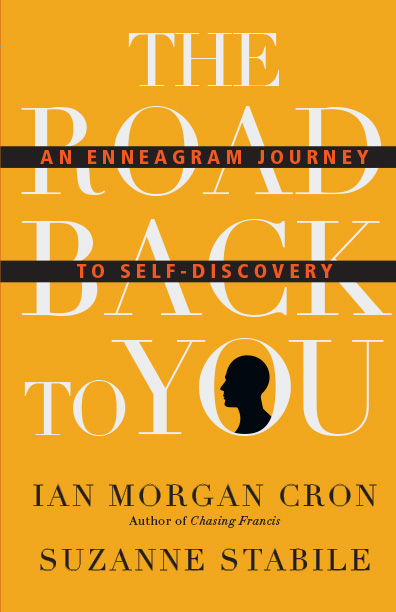
If you would like to know more about the Enneagram Type Four, or the Enneagram in general, a great place to start is The Enneagram Institute. A popular book for an introduction to the Enneagram, with a Christian influence, is The Road Back to You by Ian Morgan Cron and Suzanne Stabile.

Or if you have further questions, or thoughts, and would also like to find yourself in a conversation around the Enneagram, you can reach out to me via email at toby@therapyhorizon.com.

Thanks for reading, and remember to experience your feelings!! 

— Toby Kriwiel, LMFT
Enneagram 3: The Performer

The last blog post was about The Enneagram 2 (click HERE to go back and read it). 

This week focuses on Enneagram Three, The Performer.  Healthy Threes are movers and shakers who set goals but know how to balance work and rest.  They are comfortable in the spotlight but also in following someone else’s lead.  

Threes can do any kind of work, but if there are ladders to climb at work you can bet Threes are climbing them.  They are drawn to leadership and thrive in the spotlight.  Almost chameleon-like, Threes can read a room and be the version of themselves they need to be to find success there.  Put them in a group of executives and they’ve got the charisma and industry knowledge to mix and mingle.  With family they’ve got a different set of social skills and the same is true with a volunteer board, bowling league, or church group.  Threes tend to be good with people.

The deadly sin of Threes is deceit.  This doesn’t necessarily mean they lie to others but rather to themselves.  When they aren’t healthy, all of the image crafting and winning over others can leave Threes unsure about who they really are.  Threes can struggle with taking time for self-reflection.  They use the superpower of understanding others’ emotions to be successful in relationships but sometimes feel their own emotions get in the way of meeting goals.  My Threes as therapy clients learn to slow down and reflect on their own values and then set goals in alignment with these values.

Threes and Ones must be a good friendship combo because several of my closest friends are Threes.  Both personalities are driven and goal-oriented. A major difference I see between Ones and Threes is in cutting corners.  Ones will stress out if the bookshelf has extra screws at the end of building it while Threes mostly care that it’s done.  

There’s a competitive nature to Threes when they’re honest with themselves.  Years ago, a Three friend commented that they liked “being a big fish in a small pond” and I think this is a great example of a Three doing enough personal reflection to be able to recognize their competitive streak and even find humor in it. 

Some famous Threes are Taylor Swift, Jen Hatmaker, and probably a great many celebrities and politicians.  Capitalism and social media reward Three-ness.  The authors of The Road Back to You (available HERE) call the United States a Three Country, so I’m guessing there’s a little Three in all of us.

Enneagram 2: The Helper

The last blog post was about The Enneagram 1 (click HERE to go back and read it). 

This week’s topic is Enneagram Two, a good topic for me because I identify as a One with a Two wing.  You might ask “What is a wing?”  Basically it means that each personality takes on some of the characteristics of an adjacent number.  So, as a One I can have a 9 wing or a 2 wing.  My second highest score after taking an enneagram personality test (found HERE) was Two.  I answered yes to 13 of the 20 “What it’s like to be a Two” questions in The Road Back to You (available HERE) so I have some lived experience regarding Twos.  

Healthy Twos are caregivers who set good boundaries by knowing what is their job and what isn’t.  They are warm, generous and kind.  When Twos are honest with themselves, however, they have a subconscious expectation that others will do things for them in return.  There can be a quid pro quo-ness to their generosity.  When they are less healthy, Twos need to be needed and pride themselves in being indispensable.  Unhealthy Twos can fall into codependent patterns and stay in relationships where they allow situations they’re really not okay with. 

Twos can be found in any profession but often are drawn to helping professions like teaching, healthcare and child services.  They thrive in these environments.  However, the challenges with boundary-setting and not knowing how much to give or when to stop can lead to burnout when Twos aren’t leaving work at work.  Many a Two has landed in my office because they’re stressed out, working crazy hours, nearly going broke caring financially for people who aren’t their responsibility, and feeling resentful and used.

The enneagram has a deadly sin attached to each number and pride is attached to Twos.  Many Twos have been surprised, if not offended, by being associated with pridefulness.  This idea of pride isn’t in the traditional sense.  It’s more a pride of “I alone can fix everything” and “I know what you need better than you know” kind of thinking.  Twos can grow by learning to allow others to make mistakes, not automatically helping in every situation, and being clearer about their own needs.

Most Twos have an emotions radar and can walk into a room and know which person in the room is upset, which is bored, and which is dating another in the room.  This radar is a blessing and a curse.  Twos can fall into emotional reasoning and say things like “I just feel like they’re mad at me” or “Why do I have to ask my partner for something…shouldn’t they just know what I need?”  Twos see the world through relationships and this is where some personal reflection and knowing that not everyone sees the world the way that you see it can be helpful.   

Some famous Twos are Dolly Parton, Desmond Tutu and Princess Diana.  To be loved by a Two can be the most precious gift.  The world is a better place when Twos bring their optimistic and empathic caregiver energy and Twos are all the better when they recognize the limits of their giving.  My favorite quote for Twos is from Prentis Hemphill: “Boundaries are the distance at which I can love you and me simultaneously.” 

Enneagram 1: The Perfectionist or Improver

The last blog post was about The Enneagram (click HERE to go back and read it). 

Here we go with Enneagram One, a good starting place because I identify as a One.  After answering yes to 16 of the 20 “What it’s like to be a One” questions in The Road Back to You (available HERE) it feels pretty safe to say I’m a One.  Initially I wasn’t thrilled to know my number.  Ones are notoriously hard on themselves and I could focus only on the negative aspects of being a One – critical, rigid, perfectionistic.  I had a terrible feeling of being found out, as though someone had shined a light on places in my subconscious of which I’m not proud.   It’s taken me some time to see the positives of my One-ness.  

For example, healthy Ones are focused on a life of service and integrity.  They see the world as it could be and work for the common good.  There’s an optimism in balanced Ones that feels really beautiful.  Time travel movies often focus on small changes in the past that lead to big changes in today, Ones can see it in reverse and believe that small changes today can lead to big changes in the future.  But not everyone sees the world the way Ones see it, which can lead Ones to unhealthy mantras of “Why don’t people care as much as I do? and “Why do I have to do everything myself?” Ones tend to stuff down the disappointment and seething resentment until it explodes.  

Inside every One there’s a harsh inner critic.  Mine is much less vocal now due to training in cognitive-behavioral therapy.  Sometimes the inner critic is more a feeling like tightness in my chest when perfectionism is triggered.  I want to do the right thing all the time.  And I want to do the right thing so much that it can lead me not to do the right thing.  I wear myself out working too hard, overfunctioning, and people-pleasing to the point I become resentful and unkind (not the right thing).

Ones have a hard time relaxing and it feels physically impossible to unwind if there are tasks to complete. We feel physically uncomfortable in a messy space.  The inner critic notices all the undone tasks and reminds again and again until we just get up and do those things.  Ones are hard workers.  As the Road Back to You authors say “if you want someone who is efficient, ethical, meticulous, reliable, and does the work of two people, hire a One.”  The exception to this rule applies to projects Ones think they won’t be able to do perfectly, which can lead Ones to procrastinate since the harsh inner critic will notice the flaws forever.  

Ones can work to be healthier by letting go of the over-the-top high standards and work to see the gray in life.  Most things aren’t perfect or horrible, but somewhere in the middle.  It helps to name the inner critic and notice when that voice is especially loud.  It probably means a One needs to take a break, ask for help, or give themselves permission to do something fun.  Self-compassion is the One’s antidote to harsh self-criticism.

Ones have many gifts to share.  I’m proud to think of myself in the same group as Brene Brown, Nelson Mandela, Hermione Granger and Steve Jobs.   I don’t hate being a One.  I don’t necessarily love it, either.  It’s gray.     

Enneagram 101

So what exactly is this Enneagram thing anyway? Maybe you’ve heard about it on social media or from a friend saying “that’s such a (fill in the blank number) thing to do.” In this post I’m sharing a brief intro into my understanding of The Enneagram.

The Enneagram is a personality typing system and the first thing to let you know is that it’s not real. By real I mean that many psychologists would say it’s not a valid and reliable measure and holds no real meaning. I don’t disagree with them. And yet I find it really helpful in my personal life and with clients.

The Enneagram is, at its core, a spiritual practice. The gist is there are nine personality types, best defined as nine different ways of seeing the world. In any given moment, there are thousands of pieces of data my mind could be focusing on – the view out the window, the facial expression of a person nearby, that card I need to put in the mail today, some difficult interaction I had yesterday, my stomach saying I’m hungry…you get the idea. We can’t focus on everything all at once and The Enneagram is a way of explaining what we might focus on more often and give an understanding of our motivation for this.

When I first heard about The Enneagram I was skeptical. The most widely accepted measure of personality in my field is OCEAN (openness, conscientiousness, extroversion, agreeableness, and neuroticism). OCEAN is valid and reliable and often used in psychological research. The problem is it’s not that user-friendly for the average person. I can know I’m high in conscientiousness and agreeableness and low in neuroticism but it doesn’t easily explain my reality or how I understand the world and communicate that to others.

The Enneagram is shorthand and I always let clients know that if it isn’t a good fit for them, no problem. Except it usually is a good fit and sparks helpful conversation about how a person understands the world, communicates and behaves. It’s helped me understand myself and also helped in understanding relationships where I know the other person’s number. For example, my 6 husband sees all the potential outcomes of a situation. He thinks of “what ifs” that I would never have considered. Often this is helpful. In excess it’s an anxiety-ridden house of mirrors where reality feels skewed by so many potential negative outcomes. As a 1, I just want to do the “right” thing. I might say, “I just know in my gut this is the right decision. No, I haven’t assessed every potential what if. But this is what we should do.” Sometimes this has led to conflict. Maybe more than sometimes. But understanding myself as a 1 and him as a 6 has helped us tap into the best of ourselves, tame down the worst of ourselves, and better understand the other person’s perspective.

I’ll do future posts on each number but here’s a very high-level overview from my favorite book on the topic, The Road Back to You.

1. THE PERFECTIONIST – ethical, dedicated and reliable, they are motivated by a desire to live the right way, improve the world, and avoid fault and blame.

2. THE HELPER – warm, caring and giving, they are motivated by a need to be loved and needed, and to avoid acknowledging their own needs.

3. THE PERFORMER – success-oriented, image-conscious and wired for productivity, they are motivated by a need to be (or appear to be) successful and avoid failure.

4. THE ROMANTIC – creative, sensitive and moody, they are motivated by a need to be understood, experience their feelings and avoid being ordinary.

5. THE INVESTIGATOR – analytical, detached and private, they are motivated by a need to gain knowledge, conserve energy and avoid relying on others.

6. THE LOYALIST – committed, practical and witty…worst-case-scenario thinkers…motivated by fear and the need for security.

7. THE ENTHUSIAST – fun, spontaneous and adventurous…motivated by a need to be happy, to plan stimulating experiences and to avoid pain.

8. THE CHALLENGER – commanding, intense and confrontational…motivated by a need to be strong and avoid feeling weak or vulnerable.

9. THE PEACEMAKER – pleasant, laid back and accommodating…motivated by a need to keep the peace, merge with others and avoid conflict.

To limit the variety of human personalities to only 9 is highly reductive. No person is exactly all of these or only these. Rather, we’re all a little of all nine. Check out The Road Back to You for more information. It’s a quick read.

Choosing Dinner and Pleasing a Crowd

Last week I posted about dinnertime conversation and this week I’ll stay on the topic of dinner.  Our household includes three children and two parents and it’s tricky to please 5 different taste preferences for dinner every night.

About a year ago I hit the limit of comments that “I don’t like this” and “can I make myself a pb&j?”  I’m the primary cook in our house and I want to serve dinners that are nutritious and that my family likes but it was starting to feel impossible. I needed a change for my mental health’s sake.

At the Straw that Broke the Camel’s Back dinner, I started asking my kids what meals they DO enjoy.  Like the first-born, type-A, enneagram 1 that I am, I started a list of the meals I generally make and came up with 31, which included made-from-scratch options all the way to frozen pizza.  I tallied which family members like each one and ended with only 8 meals that all 5 of us agree are awesome.  This felt a little disheartening but also empowering that I know what will work consistently.

So the new plan became serving something from the 5/5 stars list on Monday and Tuesday and then the rest of the week serve other meals with lower ratings.  Anyone who doesn’t like dinner from Wednesday-on has the option of leftovers from the Monday and Tuesday preferred options.  

This plan has been a game changer.  I’m happy to say the list of 8 is growing as we add more meals and my kids start liking some that used to be on their do not like list.  

Oh and in case you’re wondering what’s on the 5/5 list:

  • Chili
  • Lasagna
  • Popcorn Chicken
  • Pork roast
  • Beef over noodles
  • Homemade chicken noodle soup
  • Grilled chicken breast
  • BLTs
  • Pizza
  • Spaghetti with meatballs
  • Beef tacos
  • Breakfast for dinner

School’s back in session which means I have a moment to write a post.  I love the feeling of back to school season.  The fresh start makes it a great time to set new intentions like connecting more as a family.  One of my favorite traditions at our house is to share our Rose-Thorn-Bud at dinner.  

This started years ago as sharing our Favorite thing (high) and Trouble (low) for the day.  When our son who was two he would say the exact same thing at every meal, “My favorite thing is I got to see all you guuuuys…and no trouble was.”  I can still hear that phrase in his toddler voice. 

Favorite Thing and Trouble has evolved over time to Rose-Thorn-Bud and I love that it stimulates conversation and gives us all a peek into each other’s day.  

It looks like this, with each person sharing:

  • Rose: something good that happened today
  • Thorn: something not so good that happened today
  • Bud: something you’re looking forward to 
  • Budthorn: (bonus 4th item my kids created to talk about something upcoming that induces dread i.e. vaccines, tests at school)

The only rule is that everyone has to have to have a rose.  A few times my kiddos have said it was a horrible day and there’s nothing good to share because it was a day of thorns only.  We remind them that those thorns are real.  It was a hard day.  We can experience those feelings and also find the tiniest piece of gratitude, even if it’s just that we have food to eat.  

Gratitude and connecting with others are helpful tools to improve our mental health.  If you’re looking to improve dinner time conversation, I hope you’ll give Rose-Thorn-Bud a try.

So You Want to Be a Therapist

Since starting a private practice almost 6 years ago, I’ve been asked to attend multiple career fairs and to host visits with middle and high school students interested in mental health professions.  It’s exciting to see young people interested in the field and I hope I can inspire their professional ambitions and offer perspective on the realities of mental health as a career.

First, I share that becoming a therapist will require a bachelor’s and a master’s degree.  There isn’t a specific bachelor’s degree, but therapists often start in a field like social work, psychology, sociology, or family studies.  I started out as an undergrad thinking I wanted to become a physician but quickly I found I don’t like chemistry.  Looking ahead I saw a whole lot more chemistry and realized that path wasn’t for me.  I spent a couple semesters discerning my major until I took a course called Introduction to Human Development and it changed the trajectory of my career.  I loved studying for that class and I felt inspired to learn more, so much that I made it my bachelor’s degree major.

After earning a bachelor’s degree, therapists need a master’s and there are several paths to get there, including social work, marriage and family therapy, counseling and psychology.  Each has its own particular flavor and I’m happy to talk through those with students interested in becoming therapists.  I took the social work path and it was a great decision for me.  

Next I share with students the Bureau of Labor Statistics (bls.gov) information about six important skills needed in this work.  The first three I summarize as the direct client work, including communication, empathy, and interpersonal skills.  If you generally don’t like people, this is not the field for you.  The second three are the indirect work, including problem-solving, time management and organizational skills.  Having supervised at least a dozen bachelor’s and master’s-level students, I can attest that these skills are key.  I believe they can be improved, but a baseline in those six areas is necessary to be successful in the field.

In the last section, I highlight the pros and cons of practicing in an outpatient private practice clinic in a rural area.  Positives include the rewarding nature of the work, a growing field due to a high demand for therapy, and flexibility in setting your own schedule.  Some negative aspects are combating burnout, difficulties with insurance reimbursement, and the potential for dual relationships in a small town.

I’m hopeful as I see young people prioritizing their mental health and de-stigmatizing seeking therapy.  I love my work and I love sharing that passion with others, hopefully inspiring the next generation of helping professionals.  

Mental Health First Aid

In response to our nation’s mental health crisis, First United Methodist Church of Hiawatha in partnership with Horizon Therapy will bring Mental Health First Aid training to Hiawatha for a two-day training event on Sunday, November 20th and December 11th from 12-4pm each day. This groundbreaking skills-based course gives people the tools to identify, understand and respond to someone who might be struggling with a mental health or substance use challenge — and connect them with appropriate support and resources when necessary. 

One in five Americans has a mental illness, and the pandemic has dramatically increased depression and anxiety, but many are reluctant to seek help or don’t know where to turn for care. Unlike physical conditions, symptoms of mental health and substance use problems can be difficult to detect. Friends and family members may find it hard to know when and how to step in. As a result, those in need of mental health services often do not receive care until it is too late.

Just as CPR helps even those without clinical training assist an individual having a heart attack, Mental Health First Aid prepares participants to interact with a person experiencing a mental health crisis. Mental Health First Aiders learn a 5-step Action Plan that guides them through the process of reaching out and offering appropriate support. 

“Never has it been more important for our communities to talk about mental health and substance use,” says Chuck Ingoglia, president and CEO of the National Council for Mental Wellbeing, which helped bring Mental Health First Aid to the U.S. in 2008. “This program is breaking down barriers and stigma so that together we can learn how to better support one another. Without mental health, there is no health.”

In just 12 years, Mental Health First Aid has become a full-blown movement in the United States — more than 2.5 million people are certified Mental Health First Aiders, and that number is growing every day. 

Lunch and materials are provided by FUMC Healthy Congregations committee. The training is limited to 30 participants and interested persons can email sarah@therapyhorizon.com to reserve a space.